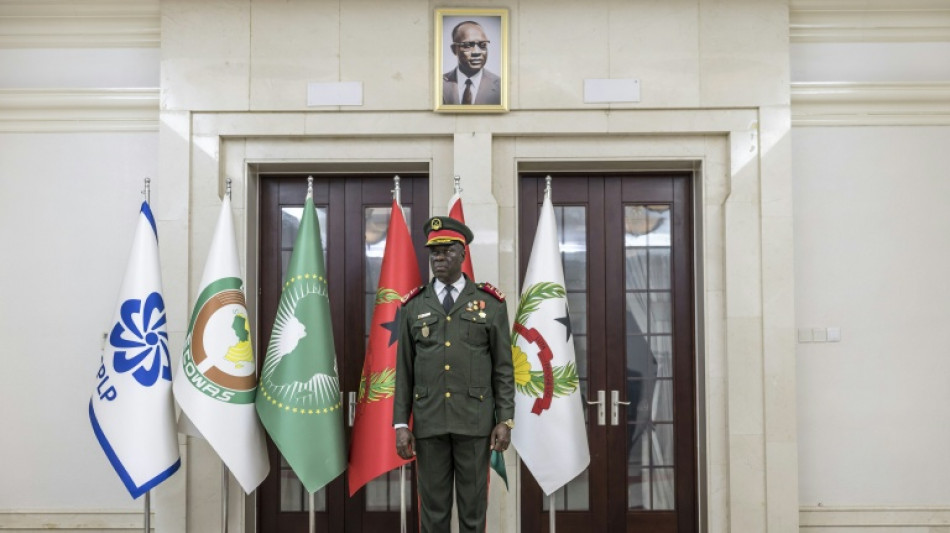
Guinea-Bissau junta urges military unit loyal to ex-president to disarm / Photo: PATRICK MEINHARDT - AFP/File
Guinea-Bissau's junta leader General Horta N'Tam urged members of the presidential guard loyal to exiled former president Umaro Sissoco Embalo to voluntarily lay down their weapons on Wednesday.
The army seized power in the perennially unstable and poor west African nation just days after a presidential vote last November, overthrowing Embalo and suspending the electoral process.
The junta established under N'Tam, a close associate of Embalo, has set December 6 as the date for presidential and legislative elections meant to restore civilian rule.
The former president told AFP late September he planned to return to stand in the polls.
But the junta said last week "security conditions" were not met for Embalo's return.
The announcement fuelled reports of discontent within the presidential guard, a unit seen as loyal to the former president.
Several members of the guard were subsequently disarmed and placed under supervision at military headquarters.
Speaking at a ceremony in the capital Bissau on Wednesday, Horta N'Tam called on guard members still holding weapons to hand them over as soon as possible.
He said authorities had created a commission to recover weapons and military equipment issued to members of the presidential guard.
The junta leader warned that anyone still keeping weapons should return them immediately or face consequences if they refused.
Horta N'Tam said the unit had been poorly organised under the previous administration but insisted none of its members had been expelled from the armed forces.
Many observers suspected Embalo of orchestrating the November 26 coup to halt an election process he appeared to be losing.
The coup occurred one day before provisional results were to be announced.
The junta has more recently taken several steps suggesting it is distancing itself from the former president.
A diplomat based in Bissau said Horta N'Tam appeared determined to remain a central political figure while creating distance from Embalo.
The diplomat also questioned whether elections would take place in December and said a postponement remained possible.
Guinea-Bissau, a Portuguese-speaking country wedged between Senegal and Guinea, has experienced five coups and numerous attempted putsches since independence from Portugal in 1974.
The nation's crippling poverty and political chaos have also made it a fertile ground for corruption and drug smuggling.
X.Saavedra--GBA