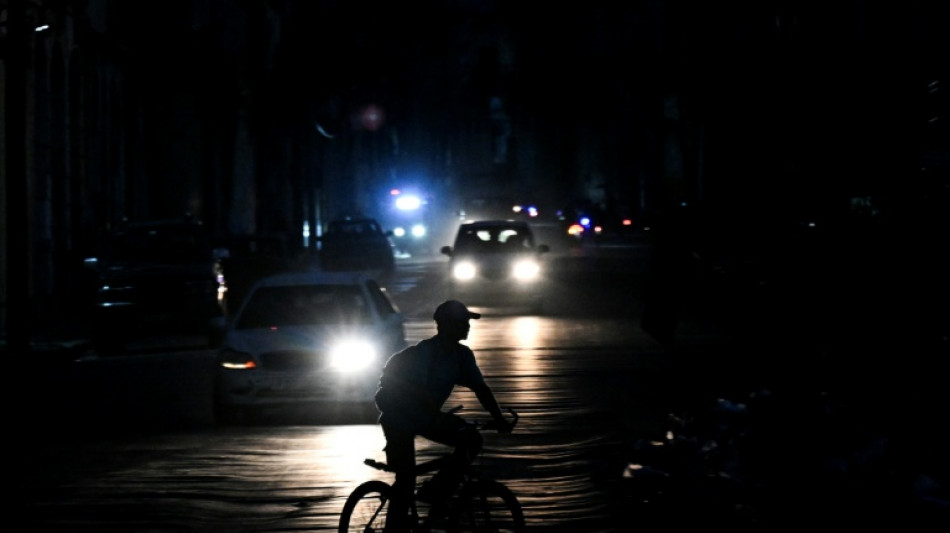
Cuba slowly regains power after latest nationwide blackout / Photo: YAMIL LAGE - AFP/File
Cuba on Monday began gradually restoring power after suffering another nationwide blackout, the sixth since the year began.
The embattled communist island is struggling to keep the lights on due to creaking infrastructure and a biting US energy blockade.
As the lights suddenly turned off across Havana late Sunday, residents sitting outside to get some respite from the summer heat audibly groaned.
By Monday morning, about 23 percent of Havana had electricity restored.
Most Cubans now have power only for a few hours a day at best, making normal life impossible.
With each outage water supplies trickle away and ceiling fans slow to a halt.
And countrywide grid collapses are becoming more common.
It is a growing strain for a society used to adversity but now stuck in a months-long crisis that has no obvious end in sight.
"Since Friday I've only had an hour and a half of electricity, there's no water, there's nothing; what we Cubans are living through is not a life," Mayra Rodriguez, a 43-year-old accountant, told AFP.
She sleeps on her apartment balcony with her two small children to cope with the summer heat.
Residents in the worst-affected areas have vented their frustrations by setting piles of trash on fire or banging on pots and pans.
Carlos Duenas, a 62-year-old mechanic, said he felt worn out by the "unsustainable" situation.
"No one says when the situation might improve. In the meantime, we just have to endure," he said. "Not everyone has the money to buy (solar) panels."
Many of Cuba's electricity production facilities run off fuel oil, diesel or natural gas, which are no longer regularly arriving to Cuban ports.
Washington has warned countries they will face sanctions if they deliver oil to Cuba -- a threat Havana's longtime allies have not been willing to openly test.
The administration of US President Donald Trump has authorized the arrival of only one Russian tanker -- carrying 100,000 tons of crude -- which came in March. Those reserves have since been exhausted.
Havana accuses Washington of being responsible for the dire state of the power system, while the United States argues it is due to poor internal economic management.
The seven thermoelectric plants that form the backbone of Cuba's national grid have been in operation for more than four decades and frequently suffer breakdowns.
n addition to enacting an oil blockade, the Trump administration has ramped up sanctions against Cuban state-owned businesses, prompting many foreign firms to suspend operations in the country.
The United States has also indicted former president Raul Castro, brother of revolutionary leader Fidel Castro, over the downing of two civilian planes three decades ago.
Talks between Havana and Washington appear to have amounted to little.
Havana has enacted a series of free-market reforms to give the economy a boost.
O.Soria--GBA