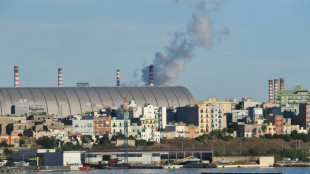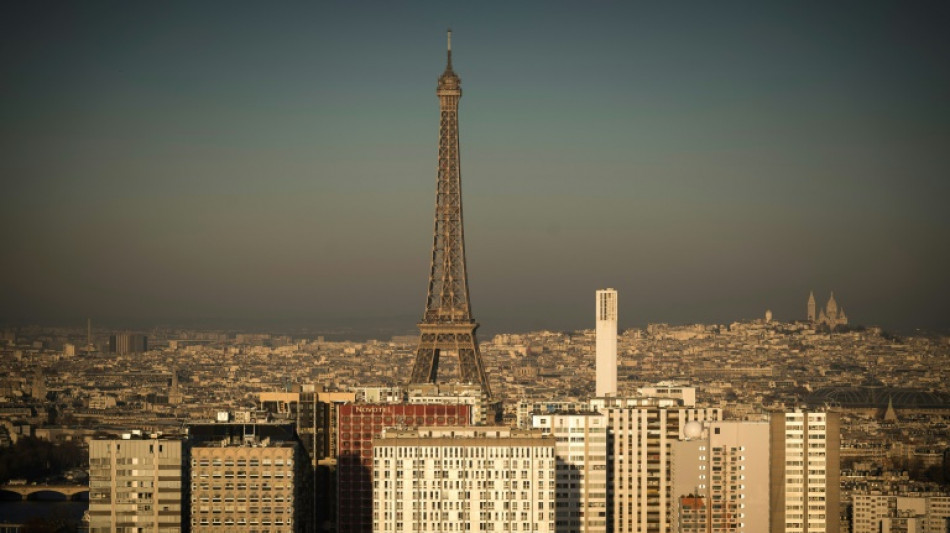
Air quality improving in Europe but more effort needed: report / Photo: LIONEL BONAVENTURE - AFP/File
Air quality in Europe is improving but more effort is needed to reach the European Union's 2030 targets, the European Environment Agency (EEA) said in its annual report on Thursday.
"EU standards were mostly met in most regions across Europe for fine particulate matter (PM2.5) and for nitrogen dioxide (NO2)," the EEA said in a statement.
However, in up to 20 percent of monitoring stations, "air pollution is still above current EU air quality standards, especially for smaller particulate matter with a diameter of 10 microns (µm) or less (PM10), ground level ozone (O3) and benzo(a)pyrene (BaP)," it said.
The EEA report covers 39 European countries, comprising the 27 EU member states and 12 countries associated to the agency, including Switzerland, Norway and Turkey.
According to the EEA, EU member states will have to implement their roadmaps if they are to meet the 2030 air quality limits, set in 2024.
"For most pollutants the distance to the 2030 target is significant and will likely require additional measures," the report said, stressing the need for efforts on fine particulate matter.
It can be politically difficult to gain acceptance for such efforts, as illustrated by France's recent rollback of low-emission zones (LEZs) targeting polluting vehicles.
Moreover, the EU's 2030 targets still fall well short of the World Health Organization's recommendations, updated in 2021.
The European agency also emphasised the lack of significant progress on ground-level ozone levels, which "have not decreased significantly", and which caused 63,000 premature deaths in the EU in 2023.
"Climate change is expected to worsen ozone pollution in Europe because of increased frequency and intensity of heat-related meteorological conditions that enhance ozone formation," the EEA said.
It warned that action at local and national levels "may not be sufficient", since ozone and its precursors can travel over long distances.
"Effective mitigation also depends on stronger European and international cooperation to tackle transboundary air pollution," the agency said.
A.Castillo--GBA